The Origins and Consequences of the “Reagan Doctrine” Wars in Angola, Central America and Afghanistan
November 13, 2017
Todd Greentree
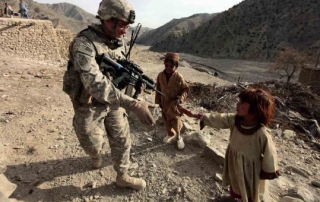
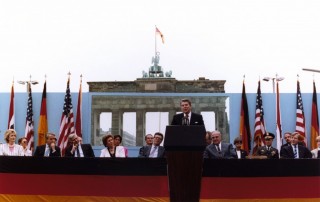
There were three active fighting fronts during the final phase of the Cold War: Angola, Central America, and Afghanistan. Rather than mere small wars on the Third World periphery, these were complex civil wars and regional conflicts provoked and protracted by global superpower confrontation. They lasted for decades and casualties were in the millions. U.S. involvement began during the Ford Administration in Angola just four months after the fall of Saigon in April 1975, and continued in Central America and Afghanistan through the Carter and Reagan administrations. Vaguely remembered as proxy wars of dubious importance, these conflicts were in fact integral to the U.S. experience of limited war since World War II. They outlasted the Cold War itself, and, although little understood, their consequences persist today.
Todd Greentree is a Research Associate with the Changing Character of War Centre at Oxford University. A former U.S. Foreign Service Officer, he has served in five wars, from El Salvador in the early 1980s through Afghanistan in 2012. Recently, he has conducted programs with the U.S. Center for Civil-Military Relations in Chile, Honduras, and Colombia. Dr. Greentree was a professor of Strategy and Policy at the Naval War College, a Visiting Scholar in the Merrill Center for Strategic Studies at Johns Hopkins SAIS, and taught foreign policy at the University of New Mexico. The author of numerous publications, he is currently writing a book about the “Reagan Doctrine” Wars.
Todd and his wife Marjolaine, a senior humanitarian official formerly with the International Red Cross (ICRC) and United Nations, recently moved back to Santa Fe after a two-year sojourn in Monterey, California.
This program will be in the Santa Fe Community College Board Room (room #223).