Afghanistan Land of Conflict & Beauty

Thursday, December 4, 2025  from 12:00 noon – 2 pm

Anastasios (Tasos) Kioses

Alexander the Great is thought to have said, “May God keep you away from the venom of the cobra, the teeth of the tiger and the revenge of the Afghans”. Winston Churchill wrote in 1897 “Financially it is ruinous. Morally it is wicked. Militarily is an open question and politically it is a blunder”.

This is not a talk that involves analyses of the Afghan situation but rather a narrative of photographic portraits and experiences during Tasos’ assignment in Afghanistan with the UN from 2017-2025.

Anastasios (Tasos) KiosesAnastasios (Tasos) Kioses is a recent retiree from the United Nations. He has worked in the private sector (Air France in Paris, France, and the Athens Olympic Committee for the 2004 Games), the State Department in Athens, Greece, and the United Nations from 2006 to 2025. He has served in the Democratic Republic of the Congo, Uganda, the Republic of Haiti, the Dominican Republic and last but not least, the Islamic Republic of Afghanistan from August 2017 to June 2025.

He is a graduate from the San Diego State University (class of 1984) specializing in Political Science – International Affairs. His professional expertise revolves around administrative affairs and contract management where over his 35-year career, has successfully managed contracts worth in the hundreds of millions of United States Dollars with considerable savings.

His interests and passions involve travelling and immersing himself in different cultures as well as photography. He is fluent in French and English, Greek (native language) and is struggling to keep up with his Spanish language skills.

Afghanistan is also colloquially known as the “Graveyard of Empires”. From Alexander the Great in the 330s BC, the three Anglo-Afghan wars in the 19th and early 20th century, the Soviet Union invasion in 1979 and its subsequent withdrawal in 1989 to the recent United States led war for 20 years that ended in the withdrawal in 2021, Afghanistan has successfully warded off the greatest empires of the time. Its strategic location on the land route between Persia (Iran) India and central Asia made it a prize for empires to (unsuccessfully) control for centuries.

Pay with Paypal

Registration: This SFWAF lunch is $26 for members and $36 for nonmembers. You may pay by check made out to SFWAF and mailed to The Santa Fe World Affairs Forum, Santa Fe, PO Box 31965, NM 87594 or with a credit card using our Paypal account.  Please indicate on your check or if using Paypal please note in “add special instructions to the seller” that your payment is for the Thursday, December 4, 2025  program.  

Members: if you have not yet paid your 2025-26 membership dues, you may include the $50 per person annual dues in your payment for this program, but please also note in special instructions that dues are included. Because we are a 501(c)(3) organization, dues and contributions are tax deductible in accordance with IRS regulations.

If you are not a member or plan to bring a guest who is not a member, please include your best contact information and your guest’s name. We use nametags. If you are interested in membership, please email us: sfwaforum@outlook.com.

Payment for this program is non-refundable after Friday November 28, 2025 . We strongly prefer that payment be made by Paypal or check postmarked by November 28, 2025 at the latest to facilitate check in. It is also very helpful if you are sending a check to email us at sfwaforum@outlook.com to let us know you plan to attend.

If you are not a member but interested in membership, please see our membership page and email sfwaforum@outlook.com for additional information.   

Because we are a 501(c)(3) organization, dues and contributions are tax deductible. 

For pricing and reservations, click here: https://sfwaf.org/payment/

Location: SFCC Board Room (#223) is in the West Wing (Administration building). The college is located at 6401 Richards Avenue, Santa Fe, NM 87508. Enter through the building’s main entrance (on the left side of the building behind the flag poles). The Board Room is on the corridor to the left of the Campus Center.

Directions: From Rodeo Road turn south onto Richards Avenue. Turn into the campus main drive. Parking lots are in front of the building. From I-25 take the Cerrillos Road exit, turn east onto Governor Miles Road and then right onto Richards Avenue. Then follow directions above.

The Speaker

Anastasios (Tasos) Kioses
Anastasios (Tasos) KiosesRecent Retiree from the United Nations
Anastasios (Tasos) Kioses is a recent retiree from the United Nations. He has worked in the private sector (Air France in Paris, France, and the Athens Olympic Committee for the 2004 Games), the State Department in Athens, Greece, and the United Nations from 2006 to 2025. He has served in the Democratic Republic of the Congo, Uganda, the Republic of Haiti, the Dominican Republic and last but not least, the Islamic Republic of Afghanistan from August 2017 to June 2025.

He is a graduate from the San Diego State University (class of 1984) specializing in Political Science – International Affairs. His professional expertise revolves around administrative affairs and contract management where over his 35-year career, has successfully managed contracts worth in the hundreds of millions of United States Dollars with considerable savings.

His interests and passions involve travelling and immersing himself in different cultures as well as photography. He is fluent in French and English, Greek (native language) and is struggling to keep up with his Spanish language skills.

Afghanistan Land of Conflict & Beauty2025-11-21T05:54:39-07:00

The Intent and Reality of Foreign Assistance to Afghanistan: Experience from Obama’s Surge

March 09, 2022

Rebecca Black

The U.S. government spent $145 billion to rebuild and develop Afghanistan over the past 20 years. Funds were implemented by a dozen USG agencies including USAID, a major player in supporting a range of activities, from building roads and power plants to improving education and health, governance, and income generation. Themes of democracy and women’s empowerment played alongside counterinsurgency and stability. Funding was big and pressure strong to deliver results in a country with diverse cultures and geography, and limited access due to the nature of war.

Rebecca Black served 25 years as a Foreign Service Officer with USAID, achieving the rank of Minister Counselor in the Senior Foreign Service. She most recently served as USAID Mission Director for Cambodia and for Mali, managing a diverse portfolio including health, education, agriculture, and governance.

Ms. Black served as the Deputy Mission Director for USAID Afghanistan and as economic and urban environment program director in India, South Africa, and Poland. Ms. Black began her professional career in community economic development in Boston, Massachusetts, following completion of a master degree from the Massachusetts Institute of Technology. Ms. Black now lives in New Mexico, working occasionally on international development assignments, and volunteer engagements.

The Speaker

US Senior Foreign Service Officer, USAID (rtd)
Rebecca Black served 25 years as a Foreign Service Officer with USAID, achieving the rank of Minister Counselor in the Senior Foreign Service. She most recently served as USAID Mission Director for Cambodia and for Mali, managing a diverse portfolio including health, education, agriculture, and governance.

Ms. Black served as the Deputy Mission Director for USAID Afghanistan and as economic and urban environment program director in India, South Africa, and Poland. Ms. Black began her professional career in community economic development in Boston, Massachusetts, following completion of a master degree from the Massachusetts Institute of Technology. Ms. Black now lives in New Mexico, working occasionally on international development assignments, and volunteer engagements.

The Intent and Reality of Foreign Assistance to Afghanistan: Experience from Obama’s Surge2022-03-05T00:13:21-07:00

Afghanistan’s Cycle of Historical Repetition

March 02, 2022

Paul Cruickshank

A personal reflection based on nearly 15 years’ experience in Afghanistan; a review of Afghan history, especially regarding the 21st Century, and its ethnic and political challenges; how such challenges led to the need for humanitarian and development assistance over the last 20 years, and in particular the need for urgent assistance to address the ongoing humanitarian crisis; and an overview of how the international community, including the United Nations, has been operating, and continues to operate, across the country in support of the Afghan people.

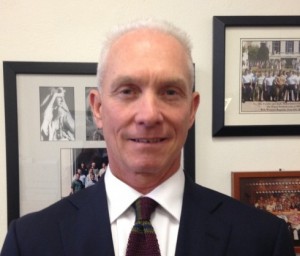
 Paul-CruickshankPaul Cruickshank comes from a military background, having served with the British Army for 20 years. He is a graduate of the British Army Command and Staff College (1994-1995), and was later appointed Member of the British Empire (MBE) by Queen Elizabeth II in 1999, for his contribution to strategic military planning for peace support operations in the Balkans. His last deployment in the army was to Afghanistan at the end of 2001 as part of the international effort to remove the Taliban regime and commence reconstruction across the country.
Paul joined the UN in Afghanistan in 2002 and helped set up, plan and implement the Afghan Disarmament, Demobilisation and Reintegration (DDR) programme. At the end of disarmament and demobilization, he moved to Indonesia (Banda Aceh) to set up and manage support to the Indonesian Government’s response to the 2004 tsunami. In 2006, Paul was posted to Iraq as Senior Advisor on Security Sector Reform. In 2009, he moved to Kosovo to manage the Support to Security Sector Reform programme, before returning to Afghanistan in 2010 to set up and run UK DFID’s M&E programme in Helmand province. He re-joined the UN in early 2011, before being posted to South Sudan as Director and Representative in early 2015. Paul returned to Afghanistan in May 2017 as UNOPS’ Director & Representative, a position he held until retiring from the UN at the end of 2021.

Paul is now the founder and CEO of Fillan Rose Ltd, a discreet management consultancy seeking, in both the public and private sectors, to apply lessons learnt over the last 20 years so that more can be done with less, and all can be done better.

The Speaker

Paul Cruickshank
Paul CruickshankFounder and CEO of Fillan Rose Ltd
Paul Cruickshank comes from a military background, having served with the British Army for 20 years. He is a graduate of the British Army Command and Staff College (1994-1995), and was later appointed Member of the British Empire (MBE) by Queen Elizabeth II in 1999, for his contribution to strategic military planning for peace support operations in the Balkans. His last deployment in the army was to Afghanistan at the end of 2001 as part of the international effort to remove the Taliban regime and commence reconstruction across the country.
Paul joined the UN in Afghanistan in 2002 and helped set up, plan and implement the Afghan Disarmament, Demobilisation and Reintegration (DDR) programme. At the end of disarmament and demobilization, he moved to Indonesia (Banda Aceh) to set up and manage support to the Indonesian Government’s response to the 2004 tsunami. In 2006, Paul was posted to Iraq as Senior Advisor on Security Sector Reform. In 2009, he moved to Kosovo to manage the Support to Security Sector Reform programme, before returning to Afghanistan in 2010 to set up and run UK DFID’s M&E programme in Helmand province. He re-joined the UN in early 2011, before being posted to South Sudan as Director and Representative in early 2015. Paul returned to Afghanistan in May 2017 as UNOPS’ Director & Representative, a position he held until retiring from the UN at the end of 2021.

Paul is now the founder and CEO of Fillan Rose Ltd, a discreet management consultancy seeking, in both the public and private sectors, to apply lessons learnt over the last 20 years so that more can be done with less, and all can be done better.

Afghanistan’s Cycle of Historical Repetition2022-03-04T22:13:04-07:00

Moving Equity Forward in Afghanistan

March 03, 2021

Susanne E. Jalbert, Ph.D

The discussion is a rapid recap of Dr. Jalbert’s last two years in Afghanistan from April 2018 to April 2020. The United States Agency for International Development (USAID) Promote: Women in Government project shook up gender norms and engendered tremendous strides toward equity in the civil service. The project provided the Government of Afghanistan with a strategic opportunity to advance women’s inclusion in the public sector.

Susanne E. Jalbert, Ph.D., is a gender equity advocate, economic development activist, and a women’s rights political strategist with over 25 years of experience on 85+ assignments with 35+ USAID implementers in about 50 countries on 4 continents.  Dr. Jalbert is often at the nexus of conflict working toward peace and stability. Currently, she presently serves as Senior Advisor for Chemonics International. Dr. Jalbert designs strategic policy models for economic escalation pertaining to the equitable inclusion of women into growing economies. In Afghanistan 2018-2020, she served as the Chief of Party for USAID-Afghanistan Promote Women in Government program. She also served as Chief of Party for the USAID-Moldova Anti-Trafficking Initiative and conducted ground-breaking research to counter human trafficking.

Dr. Jalbert publishes and speaks on the vital role of women in the economy, as well as efforts to STOP! trafficking of human beings, contributes to peace processes, gender lens leadership, and female roles in nation building. Dr. Jalbert holds a master’s and Ph.D. in education and human resources from Colorado State University and a B.A. in management from St. Mary’s College in Moraga, California.

The Speaker

Susanne E. Jalbert
Susanne E. JalbertSenior Advisor for Chemonics International
Susanne E. Jalbert, Ph.D., is a gender equity advocate, economic development activist, and a women’s rights political strategist with over 25 years of experience on 85+ assignments with 35+ USAID implementers in about 50 countries on 4 continents. Dr. Jalbert is often at the nexus of conflict working toward peace and stability. Currently, she presently serves as Senior Advisor for Chemonics International. Dr. Jalbert designs strategic policy models for economic escalation pertaining to the equitable inclusion of women into growing economies. In Afghanistan 2018-2020, she served as the Chief of Party for USAID-Afghanistan Promote Women in Government program. She also served as Chief of Party for the USAID-Moldova Anti-Trafficking Initiative and conducted ground-breaking research to counter human trafficking.
Dr. Jalbert publishes and speaks on the vital role of women in the economy, as well as efforts to STOP! trafficking of human beings, contributes to peace processes, gender lens leadership, and female roles in nation building. Dr. Jalbert holds a master’s and Ph.D. in education and human resources from Colorado State University and a B.A. in management from St. Mary’s College in Moraga, California.

Moving Equity Forward in Afghanistan2021-03-09T19:31:58-07:00

Common Sense Immigration: Let’s Talk Facts and Distinguish between Good Politics and Bad Policy

 October 23, 2018

 Todd Greentree

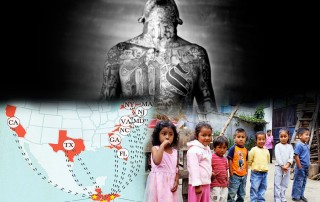
The flow of migrants from Central America is a serious issue, but the United States is not suffering a general crisis of illegal immigration.  Let’s talk facts and distinguish between good politics and bad policy. Much of this is common sense. Other nations do not “send” their worst people to the United States, rather the U.S. remains a beacon for citizens of other nations who are seeking better lives for many reasons. The total number of unauthorized immigrants in the U.S.has actually declined from its peak of 12.2 million in 2007.More Mexicans are returning home than are coming into to the U.S, a trend that began in 2009 and which job growth from NAFTA has reinforced. MS-13, the gang that Trump loves to hate, spawned in the jails of Los Angeles, not the streets of San Salvador.

The surge of people fleeing violence in El Salvador, Guatemala, and Honduras has its roots in the U.S.-backed civil wars of the 1980s, the “low quality” democracies that have resulted in the succeeding decades, and drug trafficking that transits Central America on the way to the U.S. Research generally shows that the crime rate among illegal immigrants is lower than the general population, and is even lower among legal immigrants. The principal implication is that solutions will come not by building a wall or draconian enforcement, but rather though a combination of effective border security, foreign assistance, and legislation that regularizes the flow of human beings into the country as well as the status of those who are here now.

Todd GreentreeA former U.S. Foreign Service Officer, Todd Greentree has served in five wars, from El Salvador in the early 1980s to Afghanistan between 2008 and 2012. 
Mr. Greentree graduated from the University of California Santa Cruz, received his master’s degree in International Studies from the Johns Hopkins University School of Advanced International Studies (SAIS), and his doctorate in history from Oxford University. He has taught Strategy and Policy at the Naval War College and the University of New Mexico and was a Visiting Scholar at the SAIS Merrill Center for Strategic Studies. Currently, he is a Research Associate with the Oxford Changing Character of War Centre, conducts programs in Latin America with the U.S. Center for Civil -Military Relations, and teaches international relations at UNM. He is writing a book titled The Blood of Others, about the origins and consequences of the wars at the end of the Cold War in Angola, Central America, and Afghanistan.

Location at Santa Fe Community College Board Room (#223).

Common Sense Immigration: Let’s Talk Facts and Distinguish between Good Politics and Bad Policy2019-05-01T14:20:25-07:00

Iran and North Korea: A Status Report

Sold Out!

December 4, 2017

Arvid Lundy and Cheryl Rofer

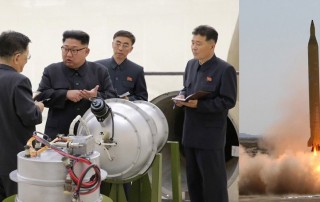
Iran’s and North Korea’s nuclear and missile programs have been much in the news lately, with continuing testing of missiles and, in North Korea’s case, a nuclear explosive. President Donald Trump has responded with threatening tweets, stoking fears of nuclear war. The two countries’ histories are very different, but both feel they have reason to fear the United States. One response is to develop nuclear weapons, deliverable by missile. Iran’s progress toward nuclear weapons was stopped by the Joint Comprehensive Plan of Action, negotiated in 2015. North Korea currently moves ahead without restriction.

We’ll discuss the motivations of both countries, where they are now, the response from the United States, and what the future might bring.

Cheryl Rofer was a chemist at the Los Alamos National Laboratory for 35 years. She now writes scientific and political commentary for the web publications Nuclear Diner and Balloon Juice. She has over 9000 followers on Twitter. She regularly provides background information on nuclear topics to reporters and has been quoted in the New York Times, Washington Post, and Vox. Her work at Los Alamos included projects in fossil fuels, laser development, and the nuclear fuel cycle. She is past president of the Los Alamos Committee on Arms Control and International Security and a founding member of SFWAF. She has published in scientific and political science journals and edited a book. She holds an A.B. from Ripon College and an M.S. from the University of California at Berkeley.

Arvid Lundy has extensive experience in nuclear export controls, nuclear proliferation intelligence, electronic instrumentation design, and clinical medical physics. Arvid spent thirty one years at Los Alamos National Laboratory as project engineer, group leader, and program manager. His career included over 100 foreign trips for the US government on nuclear issues, especially international nuclear export control.
This program will be in the Santa Fe Community College Board Room (room #223).

(more…)

Iran and North Korea: A Status Report2019-05-01T14:20:26-07:00
Load More Programs