
Programs

“One World” 5.5 Feet Long by 4.5 Feet High
Thursday, January 30, 2025 from 12:00 noon – 2 pm
Jeannie Hope Gibson
Even with our vast personal differences or location on this earth, we are all interconnected, an extended family. Migrations and intermarriages throughout our human history have impacted our DNA, altering our bloodlines. These are average everyday people from all over the world who share common ground far greater than their personal differences or their countries of origin. They have suffered from wars, famine, natural disasters, health issues, deaths of loved ones or other personal heart breaks.


The Importance and Impact of the Strategic Partnership between the US and South Korea
Thursday, November 21, 2024 from 11:30 am – 2 pm
Jenny Town, Kevin L. Miller and Iliana Ragnone
This panel is cohosted by the Santa Fe World Affairs Forum, the Santa Fe Community College and the Stimson Center. It is sponsored by the Korea Foundation
US national security in the Asia-Pacific hinges on its bilateral alliances with Pacific Rim countries. South Korea is and has been a crucial part of this relationship since the end of World War II. Today, the US-South Korea alliance remains a cornerstone to peace and
Symposia
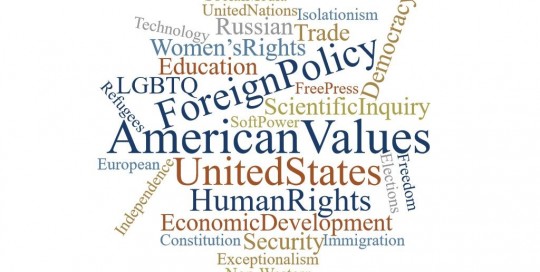
Values, Myths and Interests: Debating American Foreign Policy in an Unstable World
American foreign policy since World War II has relied upon soft power – the ability to influence others based on key human values. Since World War II, the US goal has been to project its image as a nation that is not only strong, but also “good,” drawing on the idea of American Exceptionalism to persuade others that the country is the “shining city on the hill” and a democratic “beacon of freedom” in a troubled world. Yet U.S. foreign policy has also been guided by national self-interest. This pursuit has at times conflicted with our aspirations and led to less than admirable policies implemented through counter-productive means that diminished America’s standing in the world. Today a debate over fundamental values rages within the U.S. and abroad. The world’s view of America is no longer favorable. Forty-nine percent of the globe views the United States and President Trump’s “America First” slogan unfavorably. Yet Americans themselves are still admired by fifty-nine percent according to that same Pew “gold standard” poll of international opinion. Can we change this increasingly negative view of our country overall, or if not, will it spread to individual Americans? What can we do to regain the world’s trust? Barack Obama’s 2008 election was a source of hope at home and overseas. While his administration fell short of expectations, the U.S. did regain and retain much of the international community’s respect. But in the past year, many question if the United States’ foreign policy is guided by its aspirational values. Are there fundamental human values that all nations and cultures can agree upon or are they idiosyncratic? How are such values interpreted in U.N. documents and organizations of which the U.S. was an instrumental drafter? Many American aspirational values are enshrined in the Declaration of Independence and U.S. Constitution. Do democracy, human rights, the rejection of tyranny, equality for all, life, liberty and the pursuit of happiness, constitutional government, freedom of the press and worship continue to call for respect domestically and internationally? How can we maintain a free media but deal with concerted efforts to undermine this bedrock of democracy? What about the value and importance of scientific inquiry, which has underpinned economic, health, national security, educational, social and technological foundations of the American success story since before the founding of the Republic? Finally, can America still be influential on the international stage, or have we yielded that role to others through an “America First” form of isolationism that has diminished US stature with allies to the delight of our competitors and adversaries? What options do we have to navigate today’s unstable world?

World Order Under Threat: Protectionism, Nationalism and Extremism
April 24 – 25, 2017
Dr. Patricia Kushlis, President, Santa Fe World Affairs Forum; Santa Fe Community College Representative; Javier Gonzales, Mayor of Santa Fe, New Mexico, since 2014, after serving two terms on the City Council. He was the first Hispanic President of the National Association of Counties; Robin Raphel, US Ambassador (rtd) to Tunisia and former Assistant Secretary of State for South and Central Asian Affairs; John Herbst, US Ambassador(rtd) (Uzbekistan and Ukraine), and Director of the Dinu Patriciu Eurasia Center, Atlantic Council; Dr. Raul Gouvea, Professor, International Business and Latin American Management, Anderson