Mitigating Climate Change

 September 10-11, 2018

 Wolfgang Saam, Dr. Christof Stefes,  Anton Hufnagl, Max Gruenig and Luke Spangenburg

We are pleased to announce a special panel discussion under the auspices of the Santa Fe Community College’s Aquaculture and Hydroponics Club in partnership with Ecological Institute, US; Transatlantic Climate Bridge; and the Santa Fe World Affairs Forum with support of the government of the Federal Republic of Germany.

The panel “Mitigating Climate Change:  Business, Politics and Policy” will be held Monday, September 10 from 12-1:30 at the SFCC Board Room (#223) and feature Wolfgang Saam, cofounder and managing director of Klimaschutz-Unternehmen, an association of German corporations committed to climate protection; Dr. Christof Stefes, Associate Professor at the University of Colorado, Denver and expert in renewable energy policy; Anton Hufnagel, First Secretary for Climate, Environmental and Urban Affairs at the German Embassy;  Washington, DC.

The panel will be chaired by Professor Luke Spangenburg, Director of the SFCC Biofuels Center of Excellence and Innovation Center and welcomed by Max Gruenig, President of the Ecological Institute, US.

They panelists will explore concerns about the universal problem of climate change mitigation and adaptation drawing upon insights and experiences from Germany, a recognized world leader in ambitious yet considered climate policies, and lessons shared worldwide at the September 2018 Global Climate Action Summit in San Francisco.

There will be no cost associated with this special panel. Reservations are not necessary. It is open to SFCC faculty, staff, and students, SFWAF members and others in the Santa Fe Community on a first come, first serve space available basis.  There will be an optional tour of SFCC’s environmental facilities from 1:30-2 for the visiting German experts.  SFCC invites program attendees to join the tour.

THE PANELISTS  

Wolfgang Saam Director, Climate Protection and Energy Efficiency Group of the German Economy Wolfgang Saam is co-founder and director of the Climate Protection and Energy Efficiency Group of the German Economy, where he works on facilitating green business solutions in German companies and enhancing sustainable policy frameworks. As an expert, Wolfgang presents sustainable business development in government consultations, business committees and amongst non-governmental organizations. His recent project covered the interplay of employees’ preferences and employer’s programs to implement climate and energy savings activities in companies.  Before co-founding the Climate Protection Group, Mr Saam worked as a project manager at the Association of German Chambers of Business and Commerce in Berlin where he focused on energy efficiency and green-tech solutions. He studied political science and public policy at the University of Freiburg, the University of Michigan and the University of Potsdam. His expertise on international energy security issues was published by the Konrad-Adenauer-Foundation.

Dr. Christoph H Stefes, a German citizen, is a Professor at the Department of Political Science, University of Colorado Denver. In his teaching and research, he focuses on European and Post-Soviet Politics. For the past twelve years, he has studied the politics surrounding transitions towards sustainable energy systems on both sides of the Atlantic. He is the author and editor of several books and articles on this topic, notably Germany’s Energy Transitions. A Comparative Perspective (with Carol Hager, 2006): https://www.palgrave.com/us/book/9781137442871. In his most recent project, he analyzes the various forms of resistance against sustainable energy. 

Anton Hufnagl serves as First Secretary for Climate, Environment and Urban Affairs at the German Embassy in Washington, D.C. Previously, he helped defend the German government against compensation claims by the operators of nuclear power plants in national and international proceedings. Until 2010, Anton was an analyst with J.P. Morgan’s Exotics and Hybrids desk in London, U.K. Anton has studied economics and statistics in Paris, Mannheim and Moscow. More recently, he received his Master in European Philosophy from the Universities of Vienna and Hagen. In 2017, he finished his studies at the Hertie School of Governance, where he was on a full scholarship from the Federal Ministry for the Environment.

Max-GruenigMax Gruenig, Max Gruenig is the President of Ecologic Institute US and has been with Ecologic Institute since 2007. His work focuses on sustainable development in the energy and transport sector, as well as urban sustainability and resilient cities. In 2004, Max Gruenig received his degree in economics from the Humboldt-Universität zu Berlin (HU Berlin, Germany). The main focus of his studies was natural resource economics and auction theory. He has lived and worked in Germany, the United States, Iceland, and Japan. He is a native speaker of German and is fluent in English and French. He is a founding member of the European Institute for Sustainable Transport (EURIST), a member of the sustainability advisory board for NaturEnergiePlus and a member of the Consumer Research Network run by the German Federal Ministry for Justice and Consumer Protection (BMJV).

Luke Spangenburg, Panel Chair, Director of SFCC Biofuels Center of Excellence and Innovation Center.
Luke is a nationally recognized leader in the Algae and Biofuels industry and for his collaborations with educational development programs. He has current projects with the Department of Energy, National Renewable Energy Labs, Sandia National Lab, Los Alamos National Labs, EPSCoR and a variety of industry collaborations. Luke has been involved with the SFCC Alternative Fuels program since its beginning and continues to collaborate in developing new, cutting-edge programs. He has directed the Biofuels Center of Excellence since 2012 and in 2015 was voted the second ranked educational program internationally by the industry. Luke also directs the SFCC Innovation Center which creates commercialization opportunities with business to establish new local economic development   He is also the president of New Solutions Energy, a company dedicated to integrated bioenergy solutions and holds two patents for algal cultivation methods and systems. Luke’s knowledge of sustainable technologies, combined with his passion for the natural world, motivates all of his work
Location at Santa Fe Community College Board Room (#223).


(more…)

Mitigating Climate Change2019-05-01T14:20:25-07:00

Iran and North Korea: A Status Report

Sold Out!

December 4, 2017

Arvid Lundy and Cheryl Rofer

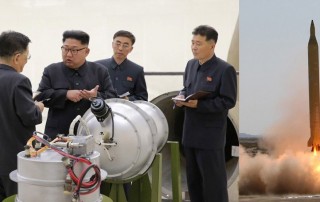
Iran’s and North Korea’s nuclear and missile programs have been much in the news lately, with continuing testing of missiles and, in North Korea’s case, a nuclear explosive. President Donald Trump has responded with threatening tweets, stoking fears of nuclear war. The two countries’ histories are very different, but both feel they have reason to fear the United States. One response is to develop nuclear weapons, deliverable by missile. Iran’s progress toward nuclear weapons was stopped by the Joint Comprehensive Plan of Action, negotiated in 2015. North Korea currently moves ahead without restriction.

We’ll discuss the motivations of both countries, where they are now, the response from the United States, and what the future might bring.

Cheryl Rofer was a chemist at the Los Alamos National Laboratory for 35 years. She now writes scientific and political commentary for the web publications Nuclear Diner and Balloon Juice. She has over 9000 followers on Twitter. She regularly provides background information on nuclear topics to reporters and has been quoted in the New York Times, Washington Post, and Vox. Her work at Los Alamos included projects in fossil fuels, laser development, and the nuclear fuel cycle. She is past president of the Los Alamos Committee on Arms Control and International Security and a founding member of SFWAF. She has published in scientific and political science journals and edited a book. She holds an A.B. from Ripon College and an M.S. from the University of California at Berkeley.

Arvid Lundy has extensive experience in nuclear export controls, nuclear proliferation intelligence, electronic instrumentation design, and clinical medical physics. Arvid spent thirty one years at Los Alamos National Laboratory as project engineer, group leader, and program manager. His career included over 100 foreign trips for the US government on nuclear issues, especially international nuclear export control.
This program will be in the Santa Fe Community College Board Room (room #223).

(more…)

Iran and North Korea: A Status Report2019-05-01T14:20:26-07:00

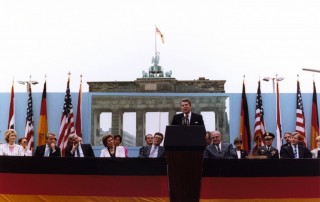
The Origins and Consequences of the “Reagan Doctrine” Wars in Angola, Central America and Afghanistan

November 13, 2017

Todd Greentree

There were three active fighting fronts during the final phase of the Cold War: Angola, Central America, and Afghanistan. Rather than mere small wars on the Third World periphery, these were complex civil wars and regional conflicts provoked and protracted by global superpower confrontation. They lasted for decades and casualties were in the millions. U.S. involvement began during the Ford Administration in Angola just four months after the fall of Saigon in April 1975, and continued in Central America and Afghanistan through the Carter and Reagan administrations. Vaguely remembered as proxy wars of dubious importance, these conflicts were in fact integral to the U.S. experience of limited war since World War II. They outlasted the Cold War itself, and, although little understood, their consequences persist today.

Todd Greentree is a Research Associate with the Changing Character of War Centre at Oxford University. A former U.S. Foreign Service Officer, he has served in five wars, from El Salvador in the early 1980s through Afghanistan in 2012. Recently, he has conducted programs with the U.S. Center for Civil-Military Relations in Chile, Honduras, and Colombia. Dr. Greentree was a professor of Strategy and Policy at the Naval War College, a Visiting Scholar in the Merrill Center for Strategic Studies at Johns Hopkins SAIS, and taught foreign policy at the University of New Mexico. The author of numerous publications, he is currently writing a book about the “Reagan Doctrine” Wars.

Todd and his wife Marjolaine, a senior humanitarian official formerly with the International Red Cross (ICRC) and United Nations, recently moved back to Santa Fe after a two-year sojourn in Monterey, California.

This program will be in the Santa Fe Community College Board Room (room #223).

(more…)

The Origins and Consequences of the “Reagan Doctrine” Wars in Angola, Central America and Afghanistan2019-05-01T14:20:26-07:00

The Middle East and US Foreign Policy Under Trump: What Has Changed?

October 30, 2017

Emile Nakhleh and Evelyn A. Early

THIS PROGRAM IS SOLD OUT!

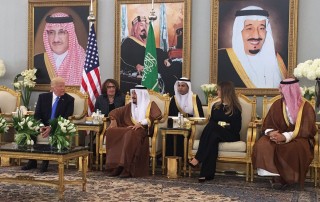
President Trump’s first stop on his first overseas trip was to Saudi Arabia before proceeding on to Israel and Europe last May. During his meetings in Riyadh, he heaped praise on Saudi leadership and seemingly offered unqualified support for the Saudi led coalition in its war against Shia Islam in contrast to his predecessor’s more nuanced policies. Yet Trump quietly extended support for the nuclear weapons agreement with Iran thereafter. Middle East experts Emile Nakhleh and Evelyn Early will explore and discuss ramifications of these and other policy changes and challenges for the US in this crucial region in the short and long term.

Emile Nakhleh is a retired Senior Intelligence Service Officer, a Research Professor and Director of the newly launched Global and National Security Policy Institute at the University of New Mexico, a National Intelligence Council/IC Associate, and a member of the Council on Foreign Relations. Since retiring from the US Government in 2006, he has consulted on national security issues, particularly Islamic radicalization, terrorism, and the Arab states of the Middle East. He has published frequently on the “Arab Spring” in the Financial Times and the LobeLog blog. At the CIA, he was a senior analyst and director of the Political Islam Strategic Analysis Program and of Regional Analysis in the Middle East. He holds a Ph.D. from the American University, Washington, D.C., in International Relations, an M.A. from Georgetown University in Political Science, and a B.A. from Saint John’s University, Minnesota, in Political Science. He is the author of numerous academic books and scholarly articles. He and his wife, Ilonka Lessnau Nakhleh, live in Albuquerque, New Mexico.

Evelyn A. Early,diplomat and anthropologist, served in the Senior Foreign Service and taught at the universities of Notre Dame, New Mexico, and Houston. Dr. Early’s postings were Khartoum, Rabat, Damascus and Prague. Stateside she was seconded as policy adviser and subject matter expert on popular Islam and pan-Arab media, to be Deputy Commandant of the Air War College at Maxwell Air Force Base. She has conducted research in Lebanon on Shi’a voluntary associations; in Egypt on traditional urban women; and in Syria on political culture.

Her publications include: Baladi Women of Cairo: Playing with an Egg and a Stone, the co-edited Everyday Life in the Muslim Middle East, so popular in university courses it is in the third edition, “Telepreachers and Talk Shows: The Fight over Egyptian Airwaves,” “Syrian Television Drama: Permitted Political Discourse,” “Fertility and Fate,” “Poetry and Pageants: Growing up in the Syrian Vanguard.” She lives in Albuquerque, New Mexico.

This program will be in the Santa Fe Community College Board Room (room #223).

(more…)

The Middle East and US Foreign Policy Under Trump: What Has Changed?2019-05-01T14:20:26-07:00

The View From Washington: Foreign Policy Opportunities and Challenges

September 26, 2017

Kristie Kenney

Ambassador Kristie KennyAmbassador Kenney will review the key foreign policy challenges facing the Trump Administration and discuss policy approaches under consideration. She will also highlight the interagency dynamics in Washington and how they affect policy formulation.
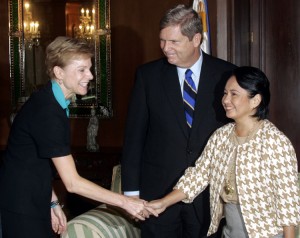
Ambassador Kristie Kenney holds the State Department’s highest diplomatic rank of Career Ambassador. Over her 30 year career, she has represented the United States abroad as Ambassador three times and served in senior positions at the State Department and the White House.

Ambassador Kenney served as the 32nd Counselor of the State Department, the Departments fifth ranking official position and on behalf of Secretary Kerry, led delegations to Latin America and Asia.

As Ambassador to Thailand from 2011-2014, Ambassador Kenney was the first female to head U.S. Embassy Bangkok, one of the United States largest diplomatic missions with over 3,000 staff.

Ambassador Kristie KenneyShe was the Ambassador to the Philippines from 2006-2010, the first woman to hold that post. She coordinated U.S. military and development assistance over multiple natural disasters. During this and subsequent assignments, she pioneered use of social media by U.S. Ambassadors to connect with diverse and dynamic foreign audiences. Earlier, she served as Ambassador to Ecuador where she advanced U.S. business and security interests in Latin America.

Ambassador Kenney holds a Bachelor’s degree from Clemson University and a Master’s degree from Tulane University. She also attended the National War College in Washington, D.C. She speaks Spanish and French, as well as some Thai and Tagalog. She is married to Ambassador William Brownfield. When not rooting for Washington area sports teams, Ambassador Kenney enjoys travel, skiing, and connecting with social media friends around the world.

Please note: Ambassador Kenney will also be addressing the World Affairs Council of Albuquerque (formerly ACFR) dinner Tuesday, September 26. SFWAF members may attend at AFCR member prices.  For more information please contact ACFR program chair Bob McGuire (remcg@comcast.net) or 505-281-1108.

This program will be in the Santa Fe Community College Board Room (room #223).

(more…)

The View From Washington: Foreign Policy Opportunities and Challenges2019-05-01T14:20:26-07:00

The Baltics, NATO and Why They Matter to the US

June 21, 2017

Daniel Kochis

Saber StrikeThe Baltic States of Estonia, Latvia, and Lithuania are more than NATO allies. They are also western democratic nations with innovative economies. They regained their independence from Moscow after the breakup of the Soviet Union in 1991 and became members of NATO and the EU in 2004. The U.S. has historically championed the sovereignty and territorial integrity of these three small Baltic nations; but they are once again under threat from a resurgent Kremlin. The ability of the U.S. and NATO to overcome the unique geographic, military, and political difficulties in defending the region has far reaching implications for long term transatlantic security and support for western values.

Daniel KochisDaniel Kochis is a Policy Analyst in European Affairs in the Margaret Thatcher Center for Freedom. He specializes in trans-Atlantic security issues regularly publishing on US policy in Europe, NATO, US-Russian relations, and Arctic issues. Kochis is also a resident author for the Heritage Foundation’s annual Index of US Military Strength and Policy Analyst in European Affairs, the Davis Institute for National Security and Foreign Policy.

His writings have been featured in Forbes, Foxnews, RealClearWorld, the National Interest, and the Washington Times. A frequent media contributor, Daniel has provided expert analysis in hundreds of interviews for foreign and domestic outlets including Al-Jezeera English, FoxNews, National Public Radio, Wall Street Journal, and Voice of America. Daniel has presented at the Transatlantic Think Tank Conference in Brussels, Belgium as well as the US Southern Command, and has provided parliamentary evidence to the UK House of Lords Select Committee on the Arctic.

Please note: Mr Kochis will also be addressing the Albuquerque Committee on Foreign Relations (ACFR) dinner Tuesday, June 20. SFWAF members may attend at AFCR member prices. For more information please contact ACFR program chair Bob McGuire (remcg@comcast.net) or 505-281-1108.

This program will be in the Santa Fe Community College Board Room (room #223).

(more…)

The Baltics, NATO and Why They Matter to the US2019-05-01T14:20:26-07:00
Load More Posts