
Programs
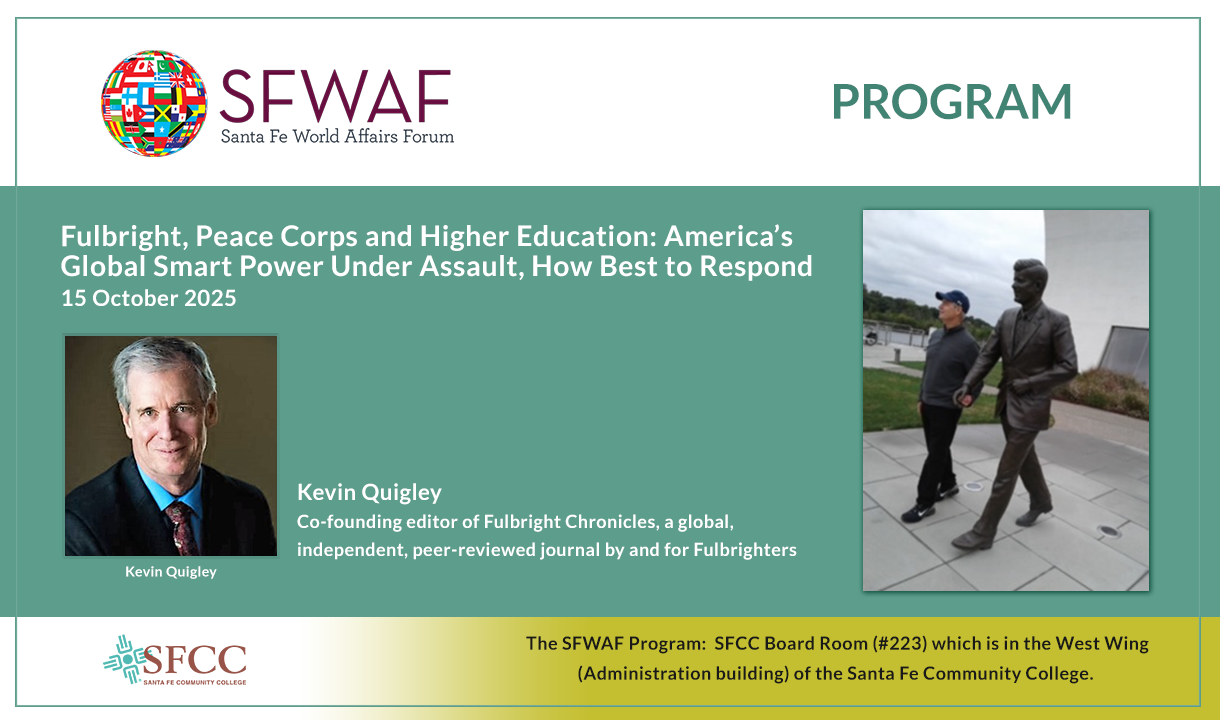
Fulbright, Peace Corps and Higher Education: America’s Global Smart Power Under Assault, How Best to Respond
Wednesday, October 15, 2025 from 12:00 noon – 2 pm
Kevin Quigley
Kevin Quigley is former college president of Marlboro College where he led its merger with Emerson College. As president of the National Peace Corps Association, he led the national campaign resulting in the Peace Corps’ largest appropriation increase in history. He has been a three-time Fulbright Senior Specialist and a Fulbright Association board member and was the first executive director of the Global Alliance for Workers and Communities, where he pioneered a tri-sectoral partnership among global corporations,

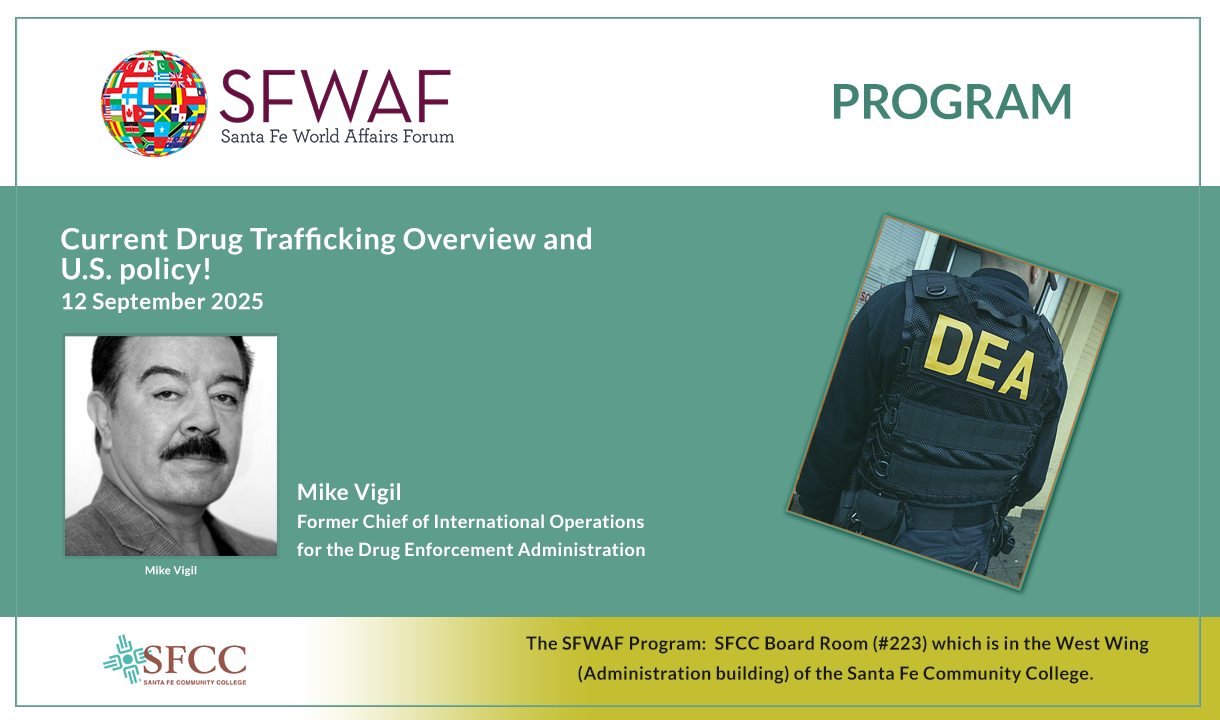
Current drug trafficking overview and U.S. policy!
Friday, September 12, 2025 from 12:00 noon – 2 pm
Mike Vigil
 Michael S. Vigil, born and raised in Española, New Mexico, earned his degree in criminal justice at New Mexico State University in Las Cruces where he graduated with Honors. He later joined the Drug Enforcement Administration (DEA) and became one of its most highly decorated agents. Throughout his career, he served in thirteen foreign and domestic posts of duty and rose through the ranks to the highest levels of
Symposia
The Warming World: Rising Temperatures, Rising Tides, Rising Turbulence
Postponed
Dates to be determined
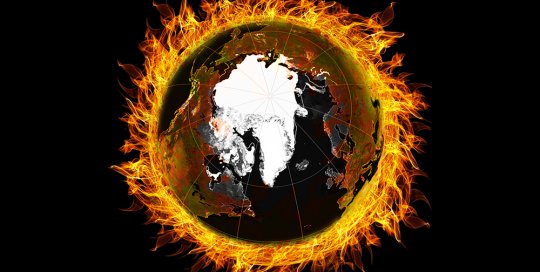
Scientific study after study demonstrates the enormity of the impact of climate change on earth’s biosphere. These changes range from the Arctic’s melting icecap and the desertification of parts of Africa to rising sea levels submerging Pacific islands and parts of populous countries like Bangladesh. The increase and intensity of typhoons in Asia and hurricanes in the Caribbean, wildfires in California and Indonesia as well as melting ice, changing trade routes and new security threats in the Arctic are all part of this manmade
Rising Authoritarianism: Can Democracy Meet the Challenge?
This year’s symposium on April 11 and 12 will address an issue of especially vital concern to us all: “Rising Authoritarianism: Can Democracy Meet the Challenge?” Taking place on the campus of Santa Fe Community College, the Symposium will bring together six specialists who will speak individually, introducing a global overview of the underlying causes of authoritarianism and of countervailing measures against its rise, followed by sessions focusing on the specific circumstances in Europe, Latin America, and the U.S. Also included will be a student panel of foreign and dual-national students studying at colleges and universities here in New Mexico. As in the past the Symposium will offer all attendees ample opportunity for questions, discussions, and informal exchanges with speakers. For more than two centuries, America has advocated for democratic principles starting with its Founding Fathers who proclaimed our nation to be created by and for the people, to joining with the liberal world to fight for our beliefs in two world wars. Following those wars, the United States was in the forefront of international efforts to create global institutions dedicated to peace, prosperity and justice. Our leaders have sometimes badly faltered or made poor decisions in seeking to preserve American leadership and universal values of democracy, human rights, and the rule of law. But we have for the most part tried to move forward towards such aspirational goals throughout our history. Other nations have not always agreed with our individual policies, but no one doubted the American example of strong democratic institutions, a robust civil society and a desire to build a world based on common values and interests. Now, as a new era of international strongmen emerges, are America’s traditions and institutions capable of ensuring that democratic principles continue to push back on the tyranny that has threatened every generation? The symposium examines this moment with open eyes, asking tough questions about the global authoritarian threat, its underlying causes, and how it can be, and is being, countered. When strong democratic institutions and civil society perform their essential functions, society enjoys a good faith debate about the best way to advance global and national interests. However, when rule of law is eroded, nationalism politicized, alliances strained, the press demonized and society fractured by rising hate crimes and attacks on electoral integrity, the norms that promote and preserve a resilient democratic society become frayed. International institutions based on shared democratic values can also be undermined and weakened when the U.S. government appears to question their continuing relevance. Can the U.S. continue to be a leader that holds others to account when we ourselves falter in meeting these challenges? What causes the authoritarian impulse to break out of the democratic norm, and why do so many here and abroad find these demagogic appeals so attractive? Has a decline in American global leadership inadvertently given other nations permission to erode their own democratic institutions? Will a fractured and divided America be able, or willing, to work with other democracies holding others accountable when we fail to do so at home? Focusing on Europe, Latin America and the US, the symposium will examine these questions in order to better understand not only the causes and symptoms that bring us to this moment, but just as importantly, to explore what can be done to meet these authoritarian challenges to democracy.