Breakdown: Lessons For A Congress In Crisis

February 23, 2023

Jeff Bingaman

SFWAF program with Jeff Bingaman, former US Senator, New Mexico discussing his new book “BREAKDOWN: LESSONS FOR A CONGRESS IN CRISIS”.

“I will explain the main points I make in the book, both about the problems I saw develop in the workings of Congress, and about the increased pressures members of Congress face as they try to act in the public interest. I will also discuss eight of the challenges Congress tried to deal with—where we succeeded and where we failed.”

Jeff Bingaman was born on October 3, 1943. He grew up in the southwestern New Mexico community of Silver City. His father was a chemistry professor and chair of the science department at Western New Mexico University. His mother taught in the public schools.

After graduating from Western (now Silver) High School in 1961, Jeff attended Harvard College and earned a Bachelor of Arts degree in government in 1965. He then entered Stanford Law School where he met, and later married, fellow law student Anne Kovacovich.

Upon earning his law degree from Stanford in 1968, Jeff and Anne returned to New Mexico. They have one son, John.

After law school, Jeff spent one year as a New Mexico Assistant Attorney General and eight years in private law practice in Santa Fe. He ran for Attorney General of New Mexico in 1978 and served four years in that position. In 1982 voters elected him to the United States Senate. At the end of his fifth term, he chose not to seek re-election and completed his service in the Senate on January 3, 2013.

At the time of his retirement from the Senate, he was chair of the Energy and Natural Resources Committee. He also served on the Finance Committee, the Health, Education, Labor and Pensions Committee and the Joint Economic Committee.

Beginning In April 2013, he spent a year as a Distinguished Fellow with the Steyer-Taylor Center for Energy Policy and Finance at Stanford Law School.

In 2015, he taught a seminar on the functioning of Congress in the Honors College at the University of New Mexico. In 2022, the University of New Mexico Press published his book, BREAKDOWN: Lessons for a Congress in Crisis.

Jeff and Anne live in Santa Fe, New Mexico.

Location:

SFCC Board Room (#223) is in the West Wing (Administration Building). The college is located at 6401 Richards Avenue, Santa Fe, NM 87508. Enter through the building’s main entrance (on the left side of the building behind the flag poles). The Board Room is on the corridor to the left of the Campus Center.

Directions:

From Rodeo Road turn south onto Richards Avenue. Turn into the campus main drive. Parking lots are in front of the building. From I-25 take the Cerrillos Road exit, turn east onto Governor Miles Road and then right onto Richards Avenue. Then follow directions above.

The SFWAF program is from 12:00 noon – 2:00 pm.

Cost for the SFWAF lunch event is $25 for members and $35 for nonmembers.

Pay with Paypal

Registration: This SFWAF lunch is $25 for members and $35 for nonmembers. You may pay by check made out to SFWAF and mailed to The Santa Fe World Affairs Forum, Santa Fe, PO Box 31965, NM 87594 or with a credit card using our Paypal account.  Please indicate on your check or if using Paypal please note in “add special instructions to the seller” that your payment is for the Thursday, February 23, 2023 program.  If you are not a member please also include your best contact information. If you are interested in membership, please email us.

Payment for this program is non-refundable after Friday February 17, 2023 if you are unable to attend.  We strongly prefer that payment be made by Paypal or check postmarked by Friday February 17, 2023 at the latest to facilitate check in. It is also very helpful if you are sending a check to email us at sfwaforum@outlook.com to let us know you plan to attend.

If you are not a member but interested in membership, please see our membership page and email sfwaforum@outlook.com for additional information.   

Because we are a 501(c)(3) organization, dues and contributions are tax deductible. 

For pricing and reservations, click here: https://sfwaf.org/payment/

The Speaker

Jeff Bingaman
Jeff BingamanFormer United States Senator from New Mexico
Jeff Bingaman was born on October 3, 1943. He grew up in the southwestern New Mexico community of Silver City. His father was a chemistry professor and chair of the science department at Western New Mexico University. His mother taught in the public schools.

After graduating from Western (now Silver) High School in 1961, Jeff attended Harvard College and earned a Bachelor of Arts degree in government in 1965. He then entered Stanford Law School where he met and later married, fellow law student Anne Kovacovich.

Upon earning his law degree from Stanford in 1968, Jeff and Anne returned to New Mexico. They have one son, John.

After law school, Jeff spent one year as a New Mexico Assistant Attorney General and eight years in private law practice in Santa Fe. He ran for Attorney General of New Mexico in 1978 and served four years in that position. In 1982 voters elected him to the United States Senate. At the end of his fifth term, he chose not to seek re-election and completed his service in the Senate on January 3, 2013.

At the time of his retirement from the Senate, he was chair of the Energy and Natural Resources Committee. He also served on the Finance Committee, the Health, Education, Labor and Pensions Committee and the Joint Economic Committee.

Beginning In April 2013, he spent a year as a Distinguished Fellow with the Steyer-Taylor Center for Energy Policy and Finance at Stanford Law School.

In 2015, he taught a seminar on the functioning of Congress in the Honors College at the University of New Mexico. In 2022, the University of New Mexico Press published his book, BREAKDOWN: Lessons for a Congress in Crisis.

Jeff and Anne live in Santa Fe, New Mexico.
Breakdown: Lessons For A Congress In Crisis2023-03-01T00:22:46-07:00

China and the Americas: Risks and Rewards

April 14, 2021

Eric Farnsworth

China’s entry in the Americas represents the single biggest shift in hemispheric affairs this century. Much of Latin America now counts China as its first or second trade partner, and investment has increased dramatically. The covid pandemic has accelerated China’s efforts across the region further. Meanwhile, the United States has increasingly warned emerging markets worldwide of the risks of “corrosive capital” and the implications of economic and political linkages with Beijing. Why the concern? And what do policy makers, observers, and citizens need to know about China’s continued regional embrace?

Eric Farnsworth has led the Washington office of the Council of the Americas and the Americas Society since 2003, during which time the stature and influence of the organization has grown significantly. He maintains an important thought leadership and advocacy role across the broad range of issues affecting the Western Hemisphere, including U.S. relations, economic development, trade, and energy; Asia-Latin American relations and global governance issues; security; and democracy. He is a widely-sought after conference speaker and media commentator, and has published numerous articles and opinion pieces in leading newspapers and policy journals.

Mr. Farnsworth began his career in Washington with the US Department of State. During his time in government he served in positions of increasing responsibility in the foreign policy and trade communities, from Western Hemisphere Affairs at State to the Office of the US Trade Representative, culminating in a three and a half year appointment as the senior advisor to the White House Special Envoy for the Americas. In this capacity he played an important role in developing and implementing the administration’s policies toward the Western Hemisphere.

Previously, Mr. Farnsworth was managing director of Manatt Jones Global Strategies, an advisory and strategic consulting group. He also worked in the global public policy division of Bristol-Myers Squibb, and in the US Senate with Sam Nunn (D-GA) and the US House of Representatives with John Edward Porter (R-IL). In 2016 he was decorated by the King of Spain for his work to promote bilateral and regional relations.

The Speaker

Eric Farnsworth
Eric FarnsworthVice President, Council of the Americas and the America Society
Eric Farnsworth has led the Washington office of the Council of the Americas and the Americas Society since 2003, during which time the stature and influence of the organization has grown significantly. He maintains an important thought leadership and advocacy role across the broad range of issues affecting the Western Hemisphere, including U.S. relations, economic development, trade, and energy; Asia-Latin American relations and global governance issues; security; and democracy. He is a widely-sought after conference speaker and media commentator, and has published numerous articles and opinion pieces in leading newspapers and policy journals.

Mr. Farnsworth began his career in Washington with the US Department of State. During his time in government he served in positions of increasing responsibility in the foreign policy and trade communities, from Western Hemisphere Affairs at State to the Office of the US Trade Representative, culminating in a three and a half year appointment as the senior advisor to the White House Special Envoy for the Americas. In this capacity he played an important role in developing and implementing the administration’s policies toward the Western Hemisphere.

Previously, Mr. Farnsworth was managing director of Manatt Jones Global Strategies, an advisory and strategic consulting group. He also worked in the global public policy division of Bristol-Myers Squibb, and in the US Senate with Sam Nunn (D-GA) and the US House of Representatives with John Edward Porter (R-IL). In 2016 he was decorated by the King of Spain for his work to promote bilateral and regional relations.

China and the Americas: Risks and Rewards2021-04-08T09:56:22-07:00

A 40 year view of institutional corruption in Central Asia and in US and International Assistance There

August  26, 2020

Nancy Lubin

You are invited to join our August 26 Webinar: “A 40 year view of institutional corruption in Central Asia and in US and International Assistance There” with Nancy Lubin, President, JNA Associates, Inc, a research and consulting firm on the former USSR, especially the Caucasus and Central Asia.

This talk will explore the challenges of US and international aid in addressing corruption — and deep-seated ‘institutional corruption’ –  in all sectors in formerly Soviet Central Asia and within the US, European and international assistance communities themselves.  Drawing from Lubin’s four decades of research, consulting and personal experience in this region, we will discuss the nature of ‘corruption’ in this part of the world; why some aid programs succeed; and why far too many assistance efforts have only exacerbated the very corruption they are committed to address and undermined their own objectives —  not only because of the difficulties of working in this part of the world, but because of institutional factors that pervade the foreign assistance community itself.

This is the seventh in our summer series Summer with SFWAF: Hot Weather, Hot Topics. We have been offering two webinars a month normally held on a Wednesday from 11:00 am to 12:15 pm Mountain Time throughout summer 2020 on a variety of current international affairs topics of concern to SFWAF members and friends.

We are using the Zoom Webinar Format for this and our other programs. If you are interested in this program, please email sfwaforum@outlook.com for additional information.

If you are not a member but interested in membership, please email sfwaforum@outlook.com for additional information.  

Because we are a 501(c)(3) organization, dues and contributions are tax deductible. 

For pricing and reservations, click here: https://sfwaf.org/payment/

A 40 year view of institutional corruption in Central Asia and in US and International Assistance There2020-08-24T18:36:43-07:00

Our Woman in Havana: Past Experiences and Future Assessments

 June 7, 2018

 Vicki Huddleston

Miguel Díaz-Canel is the president of Cuba. For the first time in almost 60 years a Castro does not lead the country. Raul Castro, however, remains the first secretary of the Communist party and the power behind Díaz-Canel. What does this mean for the future of US-Cuban relations?

In her recent book Our Woman in Havana: A Diplomat’s Chronicle of America’s Long Struggle with Castro’s Cuba Vicki Huddleston, one of America’s top Cuba-hands and Chief of the US Interests Section in Havana from 2000-2002 who later served as Ambassador to Madagascar and Mali, discusses her experiences as America’s de facto Ambassador to the island nation during the presidencies of Bill Clinton and George W Bush and assesses the changes she has witnessed over the past 18 years in the island’s history, economics and politics as well as the continuing troubled relationships between Washington and this island only 90 miles off the US coast.
Ambassador Vicki Huddleston, a Santa Fe resident and SFWAF Board Member, is an American diplomat with lengthy expertise in foreign, defense, and development policy. She was a senior advisor to the Secretary of Defense and led American diplomatic missions in Mali, Madagascar, Cuba and Ethiopia. In Haiti she was Chief of Party for a USAID Value Chain project. She was a Visiting Fellow at the Brookings Institution, a Fellow at the Institute of Politics at Harvard’s Kennedy School of Government, and as a Congressional Fellow worked on the staff of former Senator Jeff Bingaman (D-NM).

Vicki’s opinion pieces on Cuba, Mali, and Ethiopia have appeared in The New York Times, The Miami Herald, and The Washington Post. Before Our Woman in Havana, she co-authored Learning to Salsa – New Steps in Cuban Relations. She has recently spoken at the World Affairs Council-Washington, DC, the Miami Book Fair, DACOR-Washington, DC and the American Foreign Service Association. Autographed copies of her book are available at Collected Works, 202 Gallisteo Street, Santa Fe, New Mexico 87501.

This program will be in the Santa Fe Community College Board Room (room #223).

(more…)

Our Woman in Havana: Past Experiences and Future Assessments2019-05-01T14:20:25-07:00

Making the Hard Case for Soft Power: Advocacy, Citizen Diplomacy, and America’s Image Abroad

 March 5, 2018

Sherry Mueller

Former Secretary of State Elihu Root called for citizens to take a concerted interest in international relations in his article entitled,” A Requisite for the Success of Popular Diplomacy,” published in the first issue of Foreign Affairs (September 1922). This article prompts reflection on essential questions affecting the U.S. image abroad.
  • Why do we as a society undersell soft power and magnify the benefits of hard power?
  • How do we more effectively advocate for Fulbright, the International Visitor Leadership Program, Peace Corps, and other programs that give individual citizens a chance to make a difference in our turbulent world?
  • How do we encourage Millennials to be more actively involved in citizen diplomacy and international exchange?

Sherry Lee Mueller, Ph.D., Distinguished Practitioner in Residence at the School of International Service (SIS), American University, Washington, D.C., teaches courses on cultural diplomacy. In 2017 she received an Excellence in Teaching Award as an adjunct professor from the School of International Service. Ms Mueller served as President of Global Ties U.S. (formerly NCIV) from 1996 to 2011. Prior to that she also held various leadership positions at the Institute of International Education (IIE).

Ms. Mueller has served as a speaker for the U.S. Department of State in Saudi Arabia, Japan, and Washington, D.C., giving lectures and conducting workshops on leadership development for nonprofit organizations. In 2014, Georgetown University Press published the second edition of her book Working World: Careers in International Education, Exchange, and Development. Ms. Mueller earned her M.A.L.D. and Ph.D. from the Fletcher School of Law and Diplomacy.

This program will be in the Santa Fe Community College Board Room (room #223).

(more…)

Making the Hard Case for Soft Power: Advocacy, Citizen Diplomacy, and America’s Image Abroad2019-05-01T14:20:25-07:00

Update on the Politics & Economics of Brexit

 February 6, 2018

Christine Sauer and Kendra Koivu

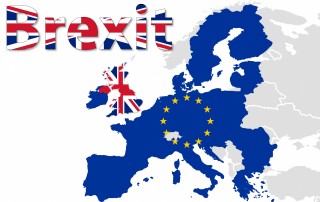
The Brexit negotiations continue against the backdrop of changing political and economic landscapes in the UK and on the European continent. In their joint talk, UNM Professors Kendra Koivu (Political Science) and Christine Sauer (Economics) will provide an update on the status of the negotiations and discuss the possible implications of Brexit under different scenarios.

Christine Sauer is Professor of Economics and Associate Director of the International Studies Institute at the University of New Mexico. A native of Germany, she earned her Ph.D. in Economics from Brown University specializing in international macro and monetary economics. Scholarly work consists of a book, “Alternative Theories of Output, Unemployment, and Inflation in Germany” (1989) as well as refereed articles and conference presentations. Dr. Sauer is an award-winning teacher (2008-2009 Outstanding Teacher Award, 2011-2013 UNM Presidential Teaching Fellow) who has lectured and taught courses on the European Union to diverse audiences at UNM and elsewhere. She has also previously addressed the Santa Fe World Affairs Forum on the European Union and the EURO.

Kendra Koivu is Assistant Professor of Political Science at the University of New Mexico. She received her doctorate from Northwestern University, where she studied comparative politics, qualitative methods, and international relations. Her substantive research interests include organized crime, narcotics trafficking, early twentieth century Eurasian politics, statebuilding, and political economy. Her work has been published in outlets such as Comparative Political Studies, Studies in Comparative International Development, and PS: Political Science and Politics. She is currently working on a book manuscript titled Consorting with Criminals: Smuggling and Statebuilding in the Interwar Period.

This spring/early summer, Professors Koivu and Sauer will co-lead an interdisciplinary study-abroad program for UNM undergraduates that focuses on the politics and economics of the European Union, “The EU at Sixty: What’s Nexit?”

This program will be in the Santa Fe Community College Board Room (room #223).

(more…)

Update on the Politics & Economics of Brexit2019-05-01T14:20:25-07:00
Load More Programs