
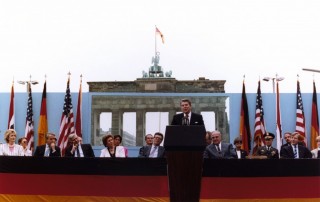
The Origins and Consequences of the “Reagan Doctrine” Wars in Angola, Central America and Afghanistan
November 13, 2017
Todd Greentree
There were three active fighting fronts during the final phase of the Cold War: Angola, Central America, and Afghanistan. Rather than mere small wars on the Third World periphery, these were complex civil wars and regional conflicts provoked and protracted by global superpower confrontation. They lasted for decades and casualties were in the millions. U.S. involvement began during the Ford Administration in Angola just four months after the fall of Saigon in April 1975, and continued in Central America and Afghanistan through the Carter and Reagan administrations. Vaguely remembered as proxy wars of dubious importance, these conflicts were in fact integral to the U.S. experience of limited war since World War II. They outlasted the Cold War itself, and, although little understood, their consequences persist today.
Todd Greentree is a Research Associate with the Changing Character of War Centre at Oxford University. A former U.S. Foreign Service Officer, he has served in five wars, from El Salvador in the early 1980s through Afghanistan in 2012. Recently, he has conducted programs with the U.S. Center for Civil-Military Relations in Chile, Honduras, and Colombia. Dr. Greentree was a professor of Strategy and Policy at the Naval War College, a Visiting Scholar in the Merrill Center for Strategic Studies at Johns Hopkins SAIS, and taught foreign policy at the University of New Mexico. The author of numerous publications, he is currently writing a book about the “Reagan Doctrine” Wars.
Todd and his wife Marjolaine, a senior humanitarian official formerly with the International Red Cross (ICRC) and United Nations, recently moved back to Santa Fe after a two-year sojourn in Monterey, California.
This program will be in the Santa Fe Community College Board Room (room #223).
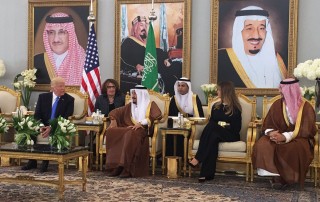

 Ambassador Kenney will review the key foreign policy challenges facing the Trump Administration and discuss policy approaches under consideration. She will also highlight the interagency dynamics in Washington and how they affect policy formulation.
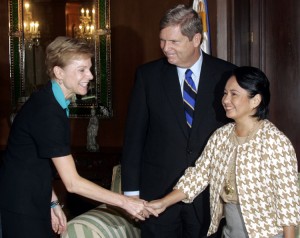 She was the Ambassador to the Philippines from 2006-2010, the first woman to hold that post. She coordinated U.S. military and development assistance over multiple natural disasters. During this and subsequent assignments, she pioneered use of social media by U.S. Ambassadors to connect with diverse and dynamic foreign audiences. Earlier, she served as Ambassador to Ecuador where she advanced U.S. business and security interests in Latin America.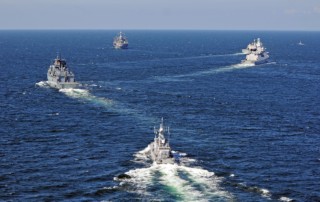
 The Baltic States of Estonia, Latvia, and Lithuania are more than NATO allies. They are also western democratic nations with innovative economies. They regained their independence from Moscow after the breakup of the Soviet Union in 1991 and became members of NATO and the EU in 2004. The U.S. has historically championed the sovereignty and territorial integrity of these three small Baltic nations; but they are once again under threat from a resurgent Kremlin. The ability of the U.S. and NATO to overcome the unique geographic, military, and political difficulties in defending the region has far reaching implications for long term transatlantic security and support for western values.
 Daniel Kochis is a Policy Analyst in European Affairs in the Margaret Thatcher Center for Freedom. He specializes in trans-Atlantic security issues regularly publishing on US policy in Europe, NATO, US-Russian relations, and Arctic issues. Kochis is also a resident author for the Heritage Foundation’s annual Index of US Military Strength and Policy Analyst in European Affairs, the Davis Institute for National Security and Foreign Policy.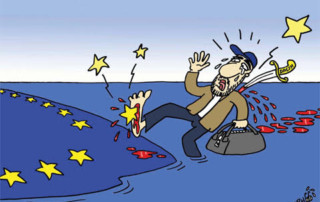
 Today, 65 million people are forcibly displaced as refugees, asylum seekers or internally displaced persons worldwide. This figure, the highest number since the end of World War II, results from an increasing number of complex, large and protracted crises worldwide. In addition, many more people are on the move to escape poverty and seek a better life elsewhere. The largest movements of migrants take place within and between developing countries, and most of the forcibly displaced end up in camps in developing countries. Such movements of the displaced, traditionally, have garnered little international attention.
 Dr. Renate Hahlen is minister counselor for development of the European Union Delegation in Washington, DC. The EU has moved rapidly to put order into uncontrolled inflows of people. Innovating practices, regulations and instruments in record time, the EU is addressing the internal and external dimensions of its new, desperate people on the move.


 Steve is a lawyer and leading expert on international trade transactions, trade facilitation and the legal foundation for international trade. He is a graduate of the University of Pennsylvania and holds graduate degrees from the University of Maryland (J.D., with honors) and Georgetown University (LL.M, international law). He lives in Ashburn, Virginia.